Prescription of corrective lenses
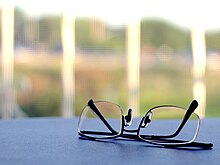
Corrective lenses are typically prescribed by an ophthalmologist or an optometrist. The prescription consists of all the specifications necessary to make the lens. Prescriptions typically include the power specifications of each lens (for each eye). Strengths are generally prescribed in quarter-diopter steps (0.25 D) because most people cannot generally distinguish between smaller increments (e.g., eighth-diopter steps / 0.125 D). The use of improper corrective lenses may not be helpful and can even exacerbate binocular vision disorders. Eyecare professionals (optometrists and ophthalmologists) are trained to determine the specific corrective lenses that will provide the clearest, most comfortable and most efficient vision, avoiding double vision and maximizing binocularity.
Over-the-counter correctionedit
Ready-made single-vision reading glasses go by many names, including over-the-counter glasses, ready readers, cheaters, magnifiers, non-prescription readers, or generic readers. They are designed to lessen the focusing burden of near work, such as reading. They are typically sold in retail locations such as pharmacies and grocery stores, but are also available in book stores and clothing retailers. They are available in common reading prescriptions with strengths ranging from +0.75 to +3.50 diopters. While these "magnifiers" do indeed make the image of the viewed object bigger, their main advantage comes from focusing the image, not magnification.
These glasses are not tailored to a person's individual needs. A difference in refractive error between the eyes or presence of astigmatism will not be accounted for. People with little to no need for correction in the distance may find off-the-shelf glasses work quite well for seeing better during near vision tasks. But if the person has a significant need for distance correction, it is less likely that the over-the-counter glasses will be perfectly effective. Although such glasses are generally considered safe, an individual prescription, as determined by an ophthalmologist or optometrist and made by a qualified optician, usually results in better visual correction and fewer headaches and visual discomfort. Another criticism of over-the-counter glasses is that they may alleviate symptoms, causing a person to forgo the other benefits of routine vision exams, such as early diagnosis of chronic disease.
Self-selected corrective lensesedit
Although lenses are normally prescribed by optometrists or ophthalmologists, there is evidence from developing countries that allowing people to select lenses for themselves produces good results in the majority of cases and is less than a tenth of the cost of prescription lenses.


Comments
Post a Comment